The SnapJury blog
Video tutorials, methods and resources for assessing orals (and written work), running your classroom and designing courses. Written by a teacher, for teachers.
Video tutorials


Getting started
Assess oral work
 Assess oral work
Assessing group presentations: one grade, individual grades… or both
Shared grade or individual grades, cooperation criteria, free riders: assessing groups without unfairness.
 Assess oral work
Preparing students for job and internship interviews
Realistic simulations, tricky questions, posture: the most useful oral of their lives can be practiced in class.
 Assess oral work
Reading aloud: an underrated oral exercise
From fluency to the pleasure of the text: bringing reading aloud back, from primary to high school, and assessing it simply.
 Assess oral work
Body language in presentations: assessing it without caricature
Posture, eye contact, gestures: what non-verbal really says, what to assess — and the traps of one-size-fits-all recipes.
 Assess oral work
Running mock oral exams without losing weeks of class
Logistics, frequency, feedback: realistic practice orals that don't eat your teaching time.
 Assess oral work
Grade now, complete later: finish your orals with a clear head
Identify the student afterwards, pick drafts back up calmly, finish on a big screen in the evening.
 Assess oral work
How to grade an oral exam in 3 minutes (with zero prep)
Start an oral with one tap, grade live, get a written summary: the step-by-step method, no rubric and no prep.
Assess written work

Rubrics & scales
Running your classroom
 Running your classroom
Getting quiet students to speak — without putting them on the spot
Shyness, insecurity, boredom: tell the causes of silence apart and offer formats where speaking becomes possible.
 Running your classroom
Running a full day of class presentations: who speaks, who listens, who learns
Speaking order, roles for the audience, smooth transitions: turning a day of orals into real learning time.
Course design
 Course design
Planning your school year without being trapped by the plan
Start from June's goals, milestone your assessments, keep slack: a year plan that guides without locking you in.
 Course design
Designing effective assignments: instructions, criteria, grading scale
A clear prompt, criteria announced up front, a scale aligned with the goal: assignments that truly assess what you taught.
Teaching resources
 Teaching resources
The flipped classroom, minus the dogma: what actually works
Theory at home, practice in class? Yes — but not just any way: success conditions and well-known pitfalls.
 Teaching resources
Grading bias in oral assessment: know it to grade fairer
Halo effect, order effects, rater fatigue: the well-known traps, and practical ways to limit them.
 Teaching resources
Peer assessment for oral presentations: why and how to start
The student observing with a rubric learns as much as the one presenting — if the role is well framed.
 Teaching resources
Nervous students in oral exams: assessing without freezing them
Separate the performance from the person, announce the rules, reward progress: stage fright can be worked on.
 Teaching resources
Giving feedback that actually helps students progress
Factual, actionable, balanced: the three ingredients of useful feedback, for orals and written work alike.
 Teaching resources
Grades or competency-based assessment? You can have both
A false duel: a criteria rubric that produces the grade, and observations that feed the feedback.
 Teaching resources
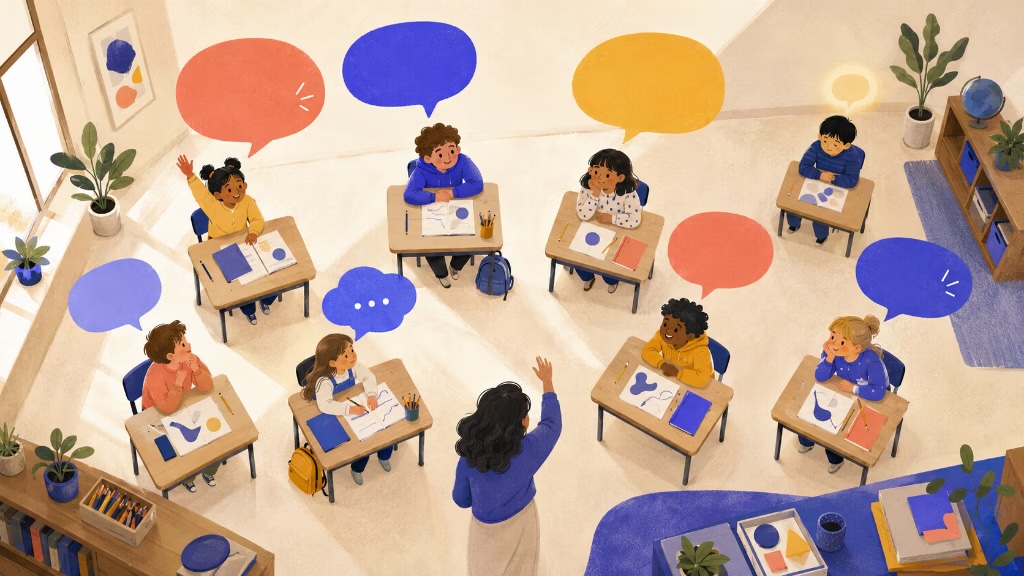
Assessing class participation every day, without the overhead
Quantity isn't quality: simple routines to assess speaking from every student, even the quiet ones.